EarthSpark International
Eradicating energy poverty in Haiti

Solar Lighting Relief for Women in Camps
Nearly four months after the earthquake, the security situation in camps in Haiti remains poor. Gangs and opportunists have hijacked the aid distribution system in some areas, charging high prices or demanding sex in exchange for access to aid. Civil society in these areas, which were labeled “red zones” by international groups shortly after the earthquake, are only now beginning to be engaged by international relief organizations. In one such area, Cite Soleil, it has been reported that less than 28 percent of the inhabitants have received aid from relief organizations; 20 percent of all violent incidents since the earthquake have been rapes; and over 50 percent of people do not feel safe at night.
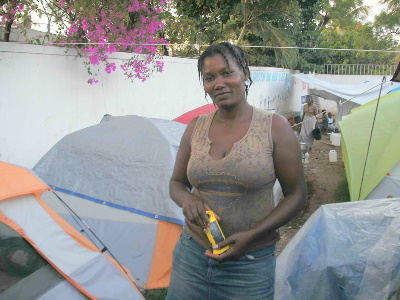
EarthSpark is working to increase public safety in these areas by distributing solar lamps. We are targeting this distribution to women, who are most vulnerable at night when they walk through the unlit camps to latrines or washing areas. By providing women with a bright and reliable source of light, they are better able to safely navigate camps at night.
We have partnered with the Clinton Global Initiative, Partners in Health, the Ministry of Women’s Affairs, and smaller organizations like AIDG and KONPAY, to distribute lamps to women as individuals and in solidarity groups. Thus far, EarthSpark and its partners have distributed 3,000 solar lights to women and their families in camps throughout Port-au-Prince and other affected areas.
Our relief effort embraces women’s groups and NGOs that work to empower Haiti’s citizens, such as KOFAVIV, the Commission of Women Victims for Victims, a network of rape survivors that organizes support meetings and works with hospitals to provide treatment and testing for sexually transmitted infections. All the partners we selected to distribute the lamps operate in the areas where violence against women and poor security have been reported and have established relationships there. Through this engagement, we are rebuilding ties between citizens, community groups, and the government, thereby empowering civil society.
As one of the camp residents, Madame Pierre, said, “The lamp is very useful. I use it when I need to go out at night.” Madame Sevile, another resident, said, “They function well, I only need to put it in the sun for it to be charged. I don't need to worry about batteries or electricity.” We have received preliminary reports that women are organizing in groups to perform safety patrols at night with their lamps, acting as escorts for other women and creating lit pathways to public latrines and washing areas.
EarthSpark is doing its small part to reduce violence against women in Haiti’s relief shelters by providing them with reliable sources of light. Our goal for 2010 remains the same: the distribution of 20,000 solar lamps to responsible community groups in the hardest hit areas of Port-au-Prince. Your support will make that goal possible.

1616 H St NW, Suite 900 Washington DC 20006